By Miles Sellyn, VP of Partnerships
More and more creators, and really the world, are leaning on AI in their work. In the last few months, one of them caught real heat from his own community for it. On the other hand, one of our customers gets thanked for it in app store reviews on a pretty regular basis.
The difference between those reactions sort of sums up how audiences are responding to AI usage, and it's where Lucy Fishell from ElevenLabs and I started our recent webinar.
If you couldn't make it, this is the official recap. All other recaps are unofficial and unsanctioned, but appreciated 😂
It also comes with a gift: the ElevenLabs team set aside a free 30-day Creator plan for Hidden Gems readers, so you can try everything below without paying a cent. Claim yours here before October 7. We have a limited number to share, so it's first-come, first-served.
What you'll find below:
- Why AI gets one creator dragged and another creator fan mail
- Two ways to show up in places you physically can't
- Our voice agent named February, and why your product might want a voice of its own
- How to protect your voice from people who'd love to borrow it
- Where to start if you're nervous
Hank, Becky, and the three tests
The first creator is Hank Green, one of the Vlogbrothers and about as beloved as anyone on the internet gets. His community pushed back hard after it came out that AI was part of his research and scripting process.
The second is Dr. Becky Kennedy. We built Good Inside, her parenting app, and it includes an AI assistant that parents can talk or type to. It answers thousands of questions a day, and the reviews are full of people who love it (including my wife, a daily user).
The underlying technology is the same, but the reactions could not be more different. When I talk to creators about AI, the gap almost always comes down to three tests:
- Disclosure. If you're using AI, say so, upfront. People will have feelings about it either way; they'll have much worse feelings if they find out on their own.
- Transparency. Be clear about how you're using it and, more importantly, why. "I can't afford to do this otherwise" and "I don't have the technical skill for this" are real reasons, and your audience deserves to hear them.
- Utility. It has to make things better for the audience, not just faster or cheaper for you. If the only person who benefits is you, expect blowback.
Hank's situation stumbled on utility, with zero bad intent. Over the years, his audience came to love that the research was so deep and the scripts came from him and his team. AI stepped in on something good.
Becky's use case is the opposite. There's no version of reality where Becky answers thousands of questions a day herself, despite it being something that people want. That's a physical impossibility! AI didn't take anything away, but rather it created access that couldn't exist otherwise.
In the session, this was the spectrum we kept coming back to. On one end sits AI that replaced the good; on the other, AI that enabled the impossible. Audiences punish the first and embrace the second.
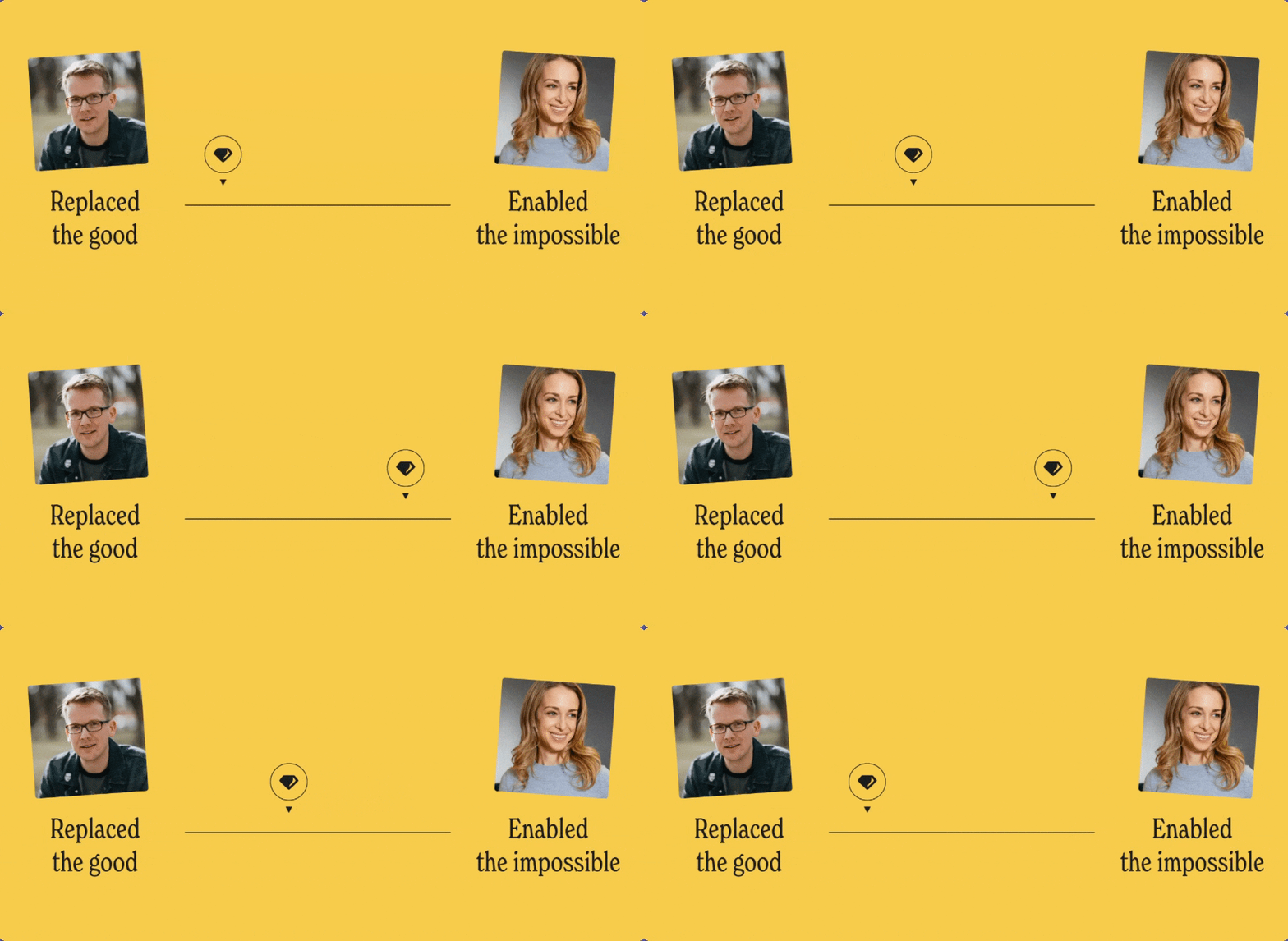
Every use case below lives on the right side of that line.
Show up in places you physically can't
1. Your newsletter, but audible. I subscribe to more newsletters than I will ever read (I know, I know, none of you would ever do that to Hidden Gems). Plenty of people would happily listen to one on a walk, though.
Live, I grabbed the URL of a published Hidden Gems post and imported it into ElevenLabs Studio, which pulled in the whole article ready to narrate. You assign a voice to each section (two voices if it's an interview or a debate), then export. There are options for Spotify and other players, but I used Audio Native, which hands you an embed code for your site. Drop it in and your post has a play button.
The voice was an ogre I'd designed from a one-line prompt (chosen for purely artistic reasons, by which I mean it made me giggle).
That's all three tests in one tidy package: nobody thinks you recorded it, you can say exactly why it exists, and a reader who'd never get through the text gets to listen instead.
2. Reach fans in 100+ languages. How many languages do you speak? Most of us land at one, maybe two (my French is best described as shoddy, and I live in Montreal, so not a great look for me, tbh). None of us are going to learn 100 languages, and none of us are going to rerecord our back catalog in them either.
Traditional dubbing mostly exists as a cautionary tale: a flat, disconnected voice drains every ounce of energy out of the content. With ElevenLabs, you can keep the same pacing and the same energy.
Be there when you can't
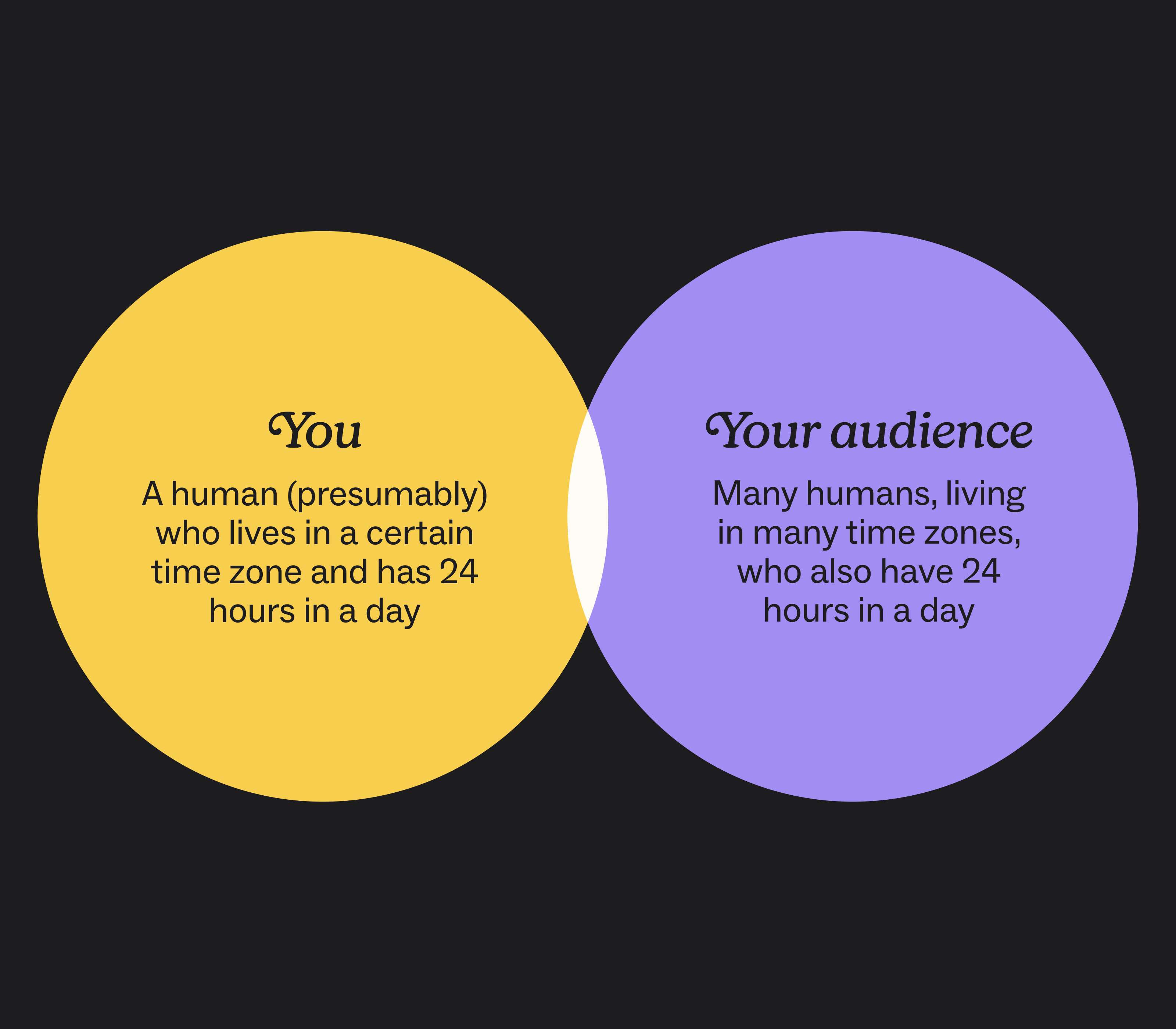
3. An agent that works the night shift. You live in one time zone and have 24 hours in a day. Your audience lives in all of them. The overlap between when you're available and when they need you is small, and a voice agent covers the rest.
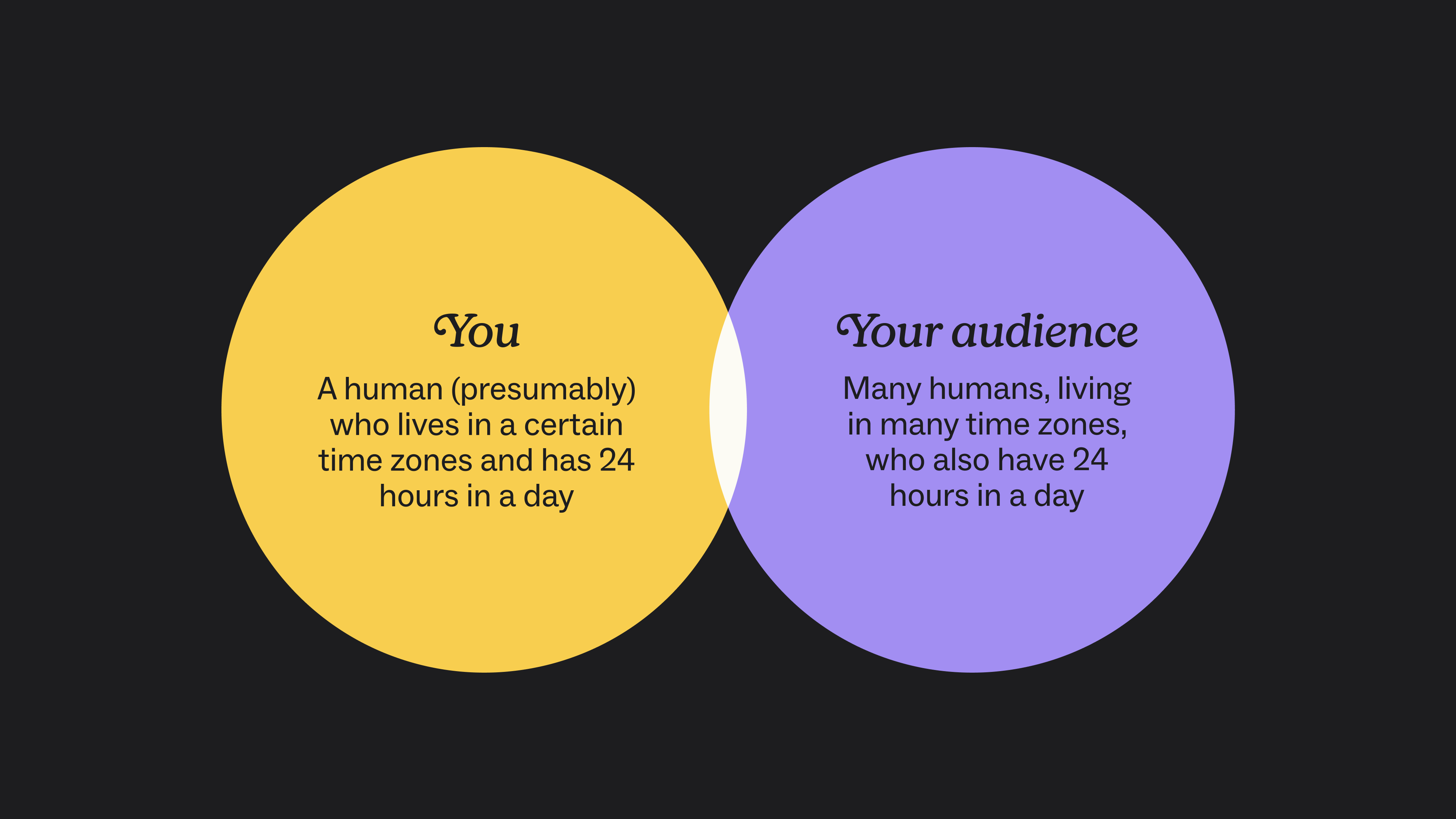
To show how simple this is, I built one for Rare Days and named it February. February is the rarest month; we're Rare Days. I seem to be the only person who finds this funny, but wtv.
Building it is mostly writing. Name the agent, point it at your website so it can pull from what you've already published, and write a system prompt covering who it is, who it helps, its tone, and your values. Then come the guardrails, which matter more than anything else. February never claims to be human or to be me, declines legal, medical, and tax questions, won't estimate project costs, never invents metrics or quotes, and won't reveal its own instructions.
Rather than recap what we did in the session here, you can go ask it a question yourself.
Two things came up in the audience Q&A that I think are worth passing along:
- You get the transcripts, so every conversation doubles as research into what your audience actually wants.
- You can connect an agent to something like ManyChat, so it can flag "this person should hear about my coaching program" and serve up the right offer. If you have multiple offers, you're never going to have the headcount to pre-qualify every fan personally, but an agent can.
4. Give your product its own voice. Lots of creators get uncomfortable with an agent that sounds like them and presents as them. Fair enough, but you don't have to do that.
The AI inside Good Inside isn't pretending to be Becky. It's called Gigi (Good Inside > GI > Gigi), and it has its own personality. App reviews say things like "I love Gigi," which tells you the audience has built a relationship with the brand instead of it needing to be a "faux Becky."
A brand avatar passes all three tests almost automatically. Nobody's being fooled, the why is obvious, and it exists to help.
Lock down your voice
5. Protect the voice you already have. If you spend any time in this space, you've seen the MrBeast deepfake ad that racked up millions of views, or the cloned MKBHD voice hawking sketchy tech wallets. The downside of making content for years is that the raw material for a fake is already out there.
Lucy walked through what ElevenLabs does about it. A professional voice clone (roughly 30 minutes of clean audio) stays siloed to your account, and once their security team vets it, the platform blocks new clones that sound too similar. It's also why people like Michael Caine and Matthew McConaughey have registered their voices there; it gives them a protected version to point to when a fake shows up.
To be clear, this won't stop all deepfakes. Think of it like a deadbolt on a door. It won't stop someone who shows up with a sledgehammer, but most people trying the handle will move on, and it locks the door on the platform where most voice cloning happens. I'd start there.
Where to start if you're nervous
The best question of the Q&A: "How do I test if my audience is cool with AI before doing it?"
My answer was to start small. Pick one thing, disclose it, explain why, and watch how people react. An audio version of your newsletter is about as low risk as it gets; if people reply with "oh nice, I'll actually get through these now," you have your answer.
Before you pick, run your idea through the three tests:
- Can I say out loud that this is AI without flinching?
- Can I explain the why in a sentence my audience would accept?
- Does this give them something they couldn't have before, or does it just save me time?
If the answer to that last one is "it just saves me time," that's fine for your back office, but I'd keep it out of the front of house unless you want people to lose their minds 😂
If you only take one thing with you: AI that replaces what people love gets punished, and AI that makes the impossible possible gets embraced. Know where your implementation sits on that line.
🎁 Claim your free 30-day ElevenLabs Creator plan. It's for Hidden Gems readers and expires October 7!
Huge thanks to Lucy and Dan at ElevenLabs for making the gift happen.