The 5 Dimensions That Determine Product Readiness
Here's a pattern we keep seeing: a creator with a real audience, real revenue, and a genuine desire to launch a product sits down with us and opens with "what should I build?"
That's a great question! But it's the wrong first question.
The question they should be asking is "am I even ready to build anything?" And those are very different questions. One is about the product. The other is about whether you've earned the right to make one yet.
Our VP of Partnerships, Miles, put this to the test at Press Publish LA last week. Instead of the usual "here's how to build a product" talk, he walked a room full of creators through a five-part self-assessment, live, and had them score themselves 1 to 5 on each dimension. By the end, every person had a number out of 25 and a verdict: ready to launch, almost there, or not yet.
We've watched creators with enormous audiences launch to crickets. We've watched creators with modest, obsessive audiences print money. The difference isn't the product. It's what was true about the creator before the product ever existed.
Here are the five things that actually determine it. Follow along and score yourself to see if you’re ready to build.
Is Your Content a Painkiller or a Vitamin?
If you read our painkillers post, you know where this is going.
You'd pay $15 for Advil mid-headache without thinking. You'd skip the $15 multivitamin even though it's "good for you." Same price, totally different urgency. Creator products work the exact same way.
Miss Excel is still one of our favorite examples here. Excel skills are a genuine career painkiller, but she packages them as something fun and a little ridiculous. She makes the medicine taste like candy 🍬

Score yourself 1 to 5 on how urgent and specific the problem your content solves really is.
Is Your Niche Strong Enough to Support a Product?
Strong niches share five traits: recurring pain (problems that don't stay solved), a clear transformation you can describe in one sentence, high emotional investment, established willingness to pay, and natural product ladders where you can picture three to five offers at different price points.
Dr. Becky Kennedy and Good Inside score a 5 on all five. Parenting problems never end, they just change costumes as your kid ages. "I'm yelling every morning" becomes "we have calm mornings." Parents already pay for childcare, school, and therapy. And there's a built-in ladder for every age and stage. The result: 100,000+ paid members across 100+ countries.
Score yourself 1 to 5 on how many of those five traits your niche has.
Would Your Audience Actually Buy This?
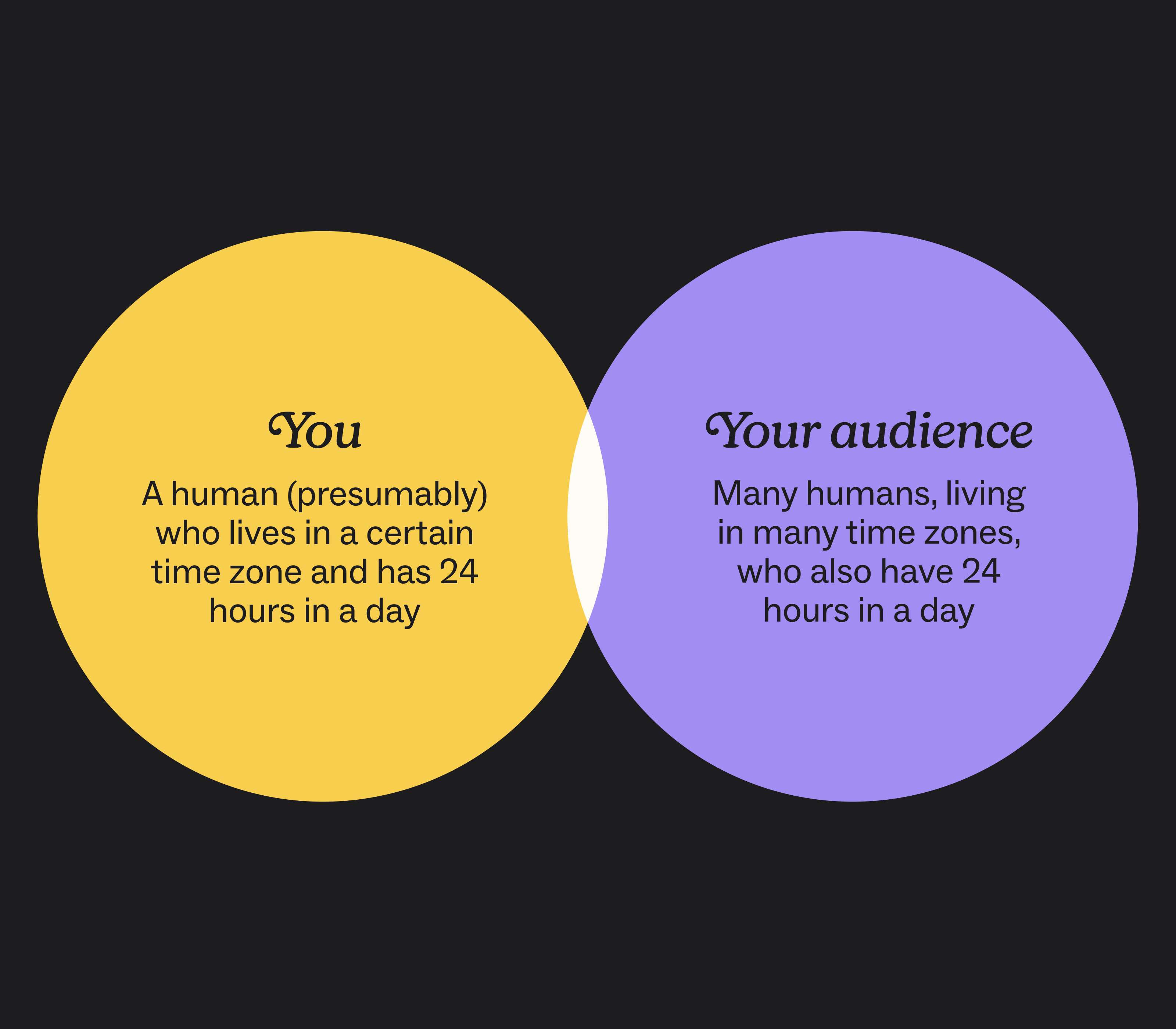
We've written a whole post about this one, but the short version: your audience and your potential customers are two circles. The bigger the overlap, the more viable the product.
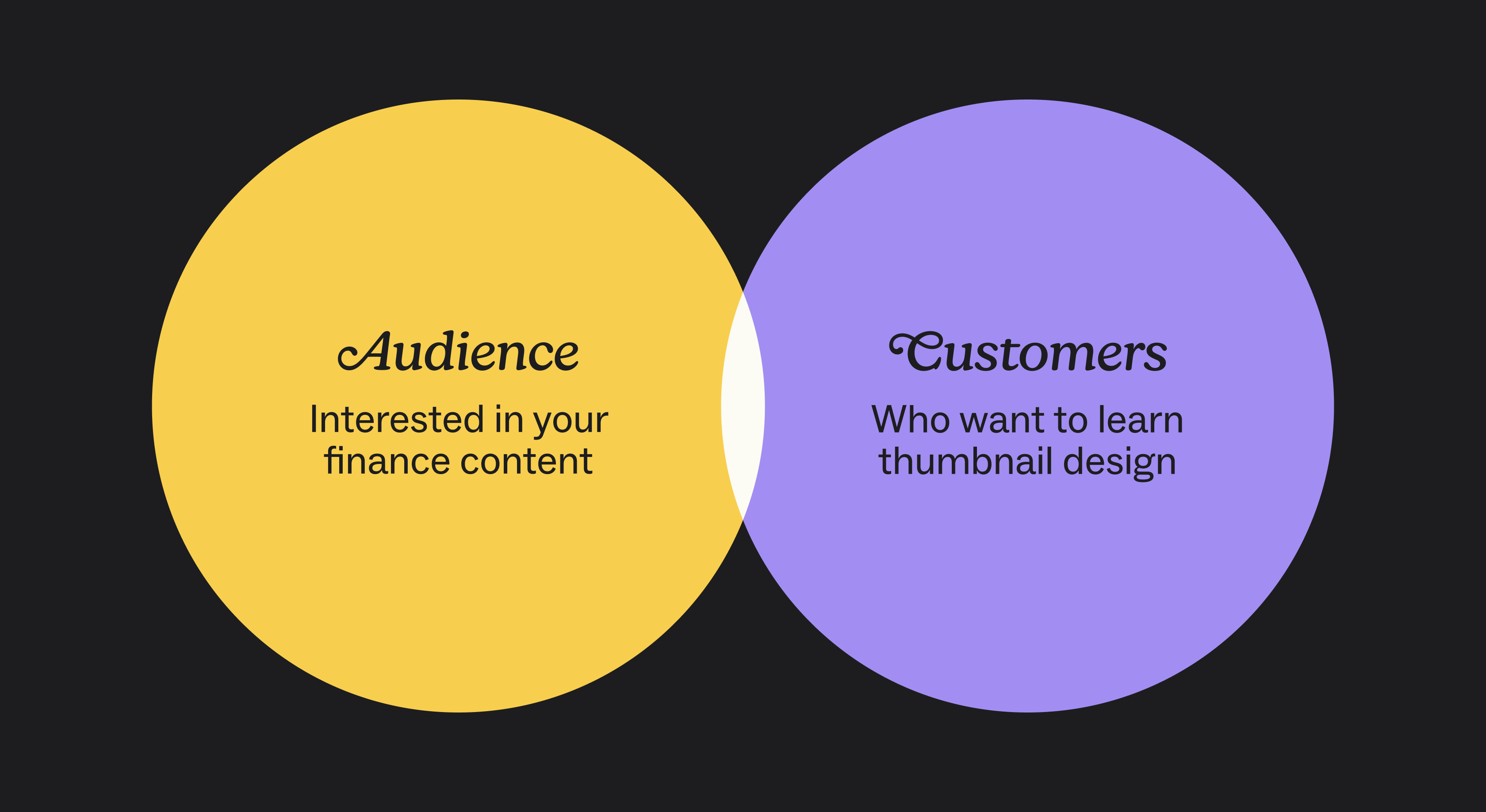
The single most common mistake we see is what we call the "default move": a creator builds a course on how to be a creator, for an audience that followed them for something completely unrelated. If you're a finance creator, your audience has budgeting problems. They do not want to learn how to design a thumbnail, even if yours are gorgeous.
When Dr. Jen Ashton came to us with 140,000+ newsletter subscribers, here's what she didn't do: "How to grow a newsletter to 100K." "Personal branding for doctors." "How to get on TV." She could have!
Instead, we designed mockups of a wellness platform and surveyed her audience with those visuals in hand (people are terrible at answering product questions in the abstract, so we gave them something concrete to react to). The survey pointed hard at fitness. At 55, Jen had been documenting a six-month fitness transformation, and the comments were pouring in. We built the Wellness Experiment with her. 8,000+ participants in the first 90 days.
Score yourself 1 to 5 on how confident you are, based on actually asking them, that your audience would buy your idea.
How Deep Is Your Content Catalog?
Most creators are sitting on a goldmine they think is a graveyard. Years of long-form videos, posts, and tutorials that the algorithm buried. That content isn't dead... it's just underleveraged. If you can curate it, chop it into useful segments, and turn it into a searchable, filterable library, you slash your time and cost to market.
(We wrote a whole thing about this too. Turns out, we write a lot about this stuff.)
Score yourself 1 to 5 on how much existing content you have that maps to what you'd build.
Do You Actually Know How to Launch This?
Most creator products don't flop because the product was bad. They flop because the launch was one Instagram story and a dash of vibes. Whomp whomp.
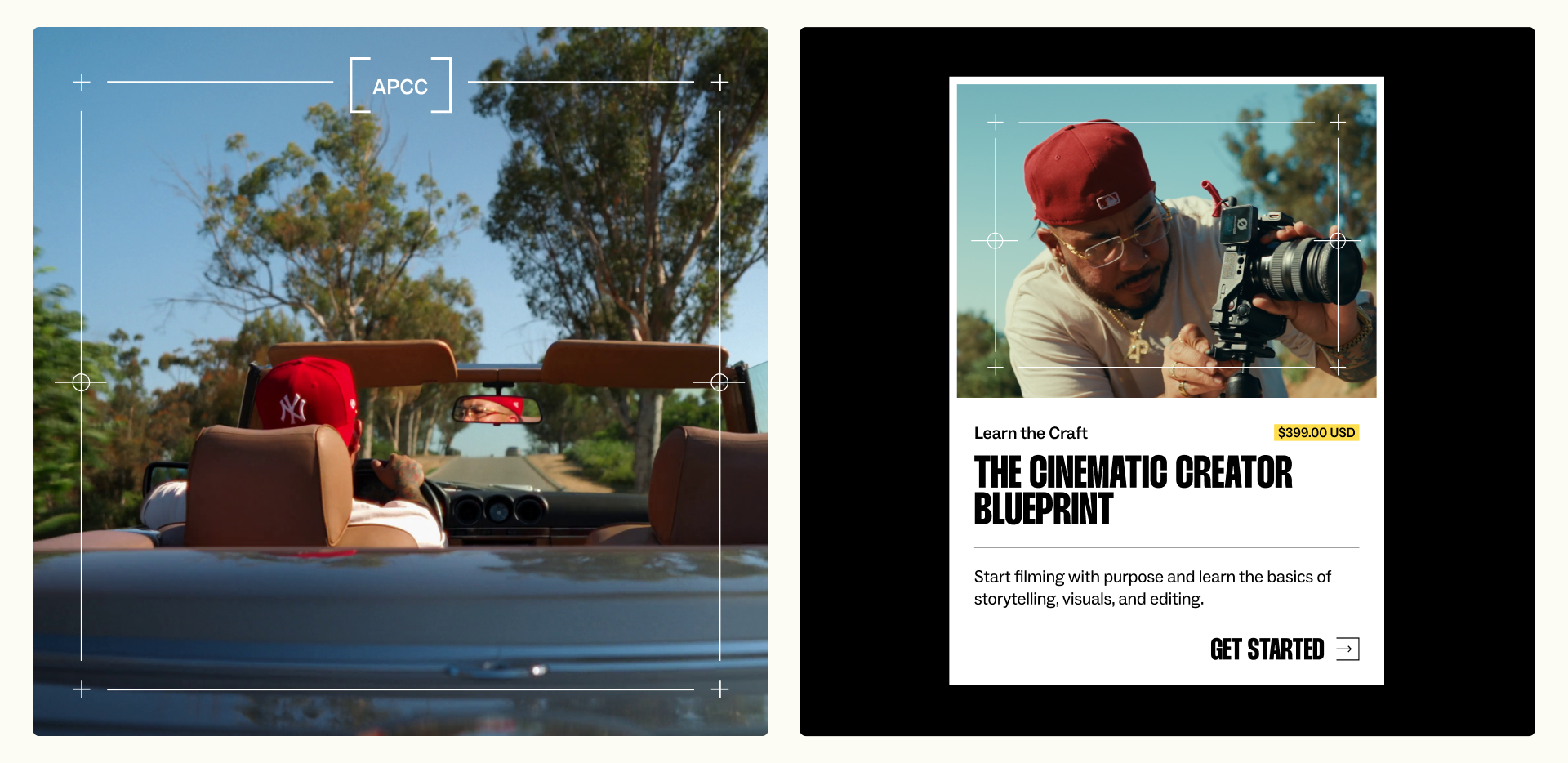
Adrian Per and Content College is the example here. Adrian scored strong on every dimension above, but he also executed the launch. He brought his audience along, built anticipation, and offered multiple tiers so people could self-select their commitment level.
The cautionary version of this: a creator we know collected 4,500 waitlist signups, went silent for months, then sent one email saying "I launched it!" Fifteen sales. From 4,500. That's a 0.3% conversion rate on a warm list ☠️
Nurtured properly, we've seen those lists convert as high as 45%. The difference is the three phases we've talked about before: awareness (bring your audience along on the build), early access (get your most excited people on a list and actually talk to them), and the launch itself (post way more than feels comfortable, because only 5-10% of your followers see any single post).
Score yourself 1 to 5 on how real your go-to-market plan is.
Add It Up
Five dimensions, 1 to 5 each, 25 points possible.
20 to 25: Your niche, audience, content, and go-to-market thinking are aligned. Your biggest risk is honestly just waiting too long.
13 to 19: Strong foundations, specific gaps. Look at your lowest-scoring dimension. That's your priority before you build anything.
5 to 12: Not yet, and that's fine. You've got work to do, but now you know exactly what it is. Fix your weakest dimensions before you spend a dollar on product development.
So Why Does This Even Matter?
The point of this exercise isn't really the total number. It's your lowest score. Your weakest dimension is probably your roadmap, and knowing what to work on today is more practical than a general feeling that you're "almost ready."
If you scored a 23, stop reading and go build the thing (and maybe give us a call 😉).
If you scored a 14, you're not behind, you just know where to aim.
And if you came out at 9, that's good news, because most creators who flop never figured out what was missing until after they'd spent the money.