By Miles Sellyn, VP of Strategy
After a brief hiatus in last week's issue to let Karolina take the mic, I'm back with your regularly scheduled programming: week three of documenting our work with Jefferson Fisher's Saidwell.
Quick recap for the latecomers: in part one we shrank a clear brief into a focused V1, and in part two we got two decision makers to disagree on a worksheet before they could disagree on a logo.
This week is about the part nobody will ever take screenshots of. What did we build into Saidwell so it could change after launch without anyone calling us in a panic?
What you'll find below:
- Why the V2 list changes how you build V1
- The engineering decision nobody asked for
- 4 things to build in and a question to ask for each one
Launch is the start (inconvenient, I know)
Remember the V1 and V2 split from week one? Community waited, personalization waited, and the AI chat got a much smaller job. That list has a sneaky side effect: the day you write it, you've admitted the product is going to change after launch, probably a lot.
Most teams know this and still build like launch is the finish line. The screens get all the attention because screens are what people review, and everything underneath gets built for the product exactly as it looks on launch day.

Any general contractor worth hiring will ask where you might want a bathroom someday, not just where you might want one today. Running a pipe while the walls are open costs very little; running it after the drywall is up costs a wall (and usually a weekend of arguing about tile). Bhimesh, our Engineering Lead on Saidwell, spends a lot of his time asking the "software version" of that question.
The decision nobody asked for
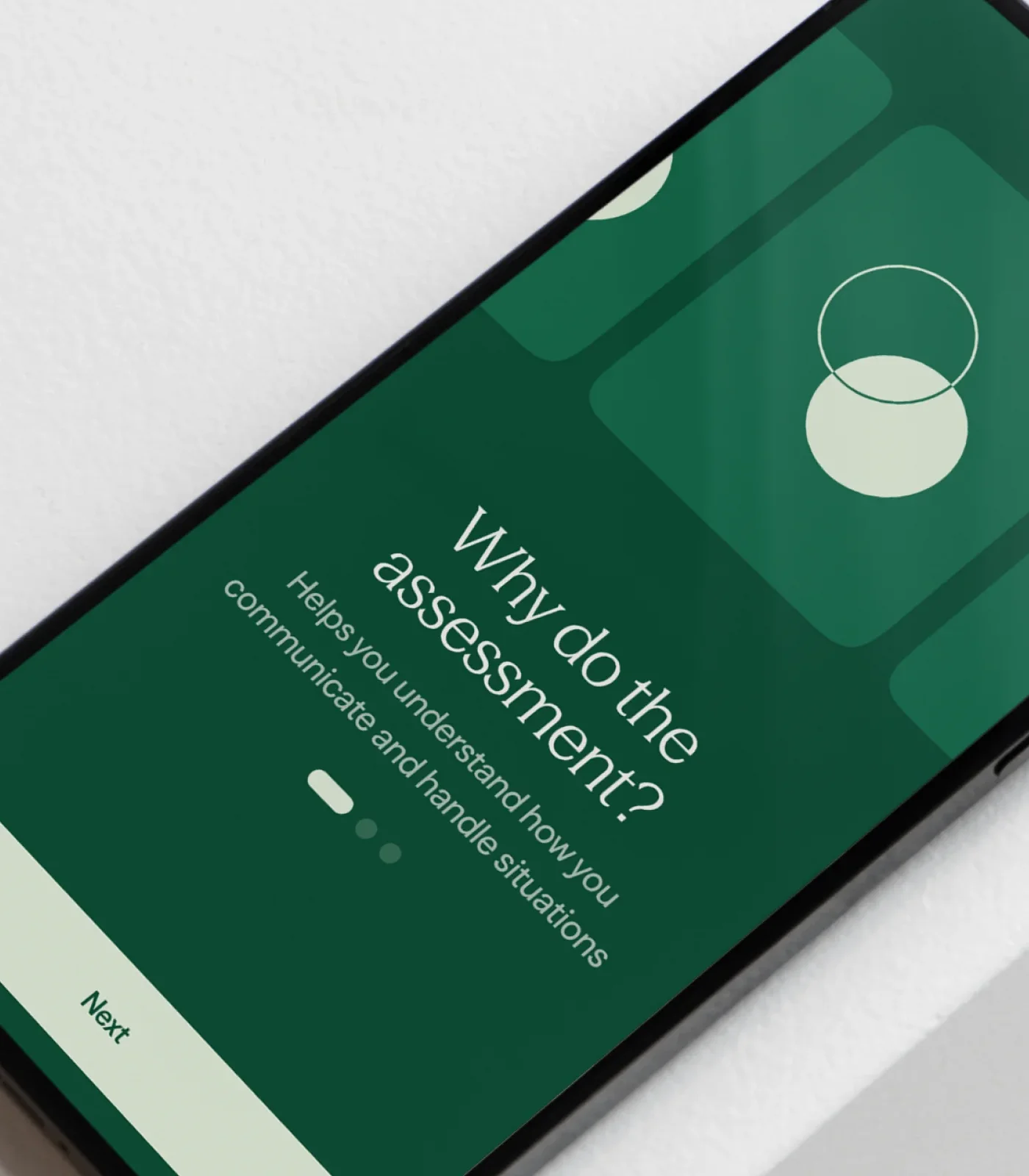
The Saidwell assessment belongs to Jefferson's team: their communication types, their questions, their study. Our job was how it felt to take, and how it got scored and stored. ("Scored and stored" sounds like a great album name.)
When we built the storage, the team made a call nobody had explicitly requested. Every answer saves the exact wording of the question it was answering. On launch day that looked like overkill. (Who's editing questions? We JUST launched.)
Then the assessment got a redesign as part of V1.1/V2. The new version went live while some people were still partway through the old one, and nobody's results broke, because every past answer still knew which question it belonged to. Two versions ran side by side, and nobody had to schedule a scary migration weekend 👻

You can't predict what will change after launch. You can predict THAT it will change, and build so the change is boring.
4 things to build in before launch day
Here's the Saidwell list, with the question I'd ask as you plan your own product strategy:
- Answers that remember their questions. Covered above. Ask: "If we edit this next month, what happens to everyone who already used it?"
- Content the client can edit without us. Course content lives in a content system Jefferson's team controls, separate from user data. They can rewrite or reorder a lesson without filing a ticket. Ask: "Who on our team will change this, and will they need an engineer to do it?"
- Access separate from purchases. Paying for Saidwell and having access to it are two different records, so the team can hand out free access, gifts and promos without touching payments. Ask: "How do we let someone in who didn't pay full price?"
- Settings, not code. Group seat counts live in the product settings inside Stripe. A new pack size is a dashboard change, not a new release. Ask: "Which numbers will we want to change, and can we change them without shipping code?"
The unglamorous stuff
Some of this never makes it into a demo. Before the October relaunch we made checkout lighter (a payment only gets created when someone taps Pay), added a queue for rush moments, and set up error alerts that page a real person, a public status page, and backups.
Nobody has ever opened a product and said "wow, great backups." You only notice them the day you need them.
The trade-off
There's a fair argument for skipping all of this: ship fast, learn, rebuild later. For a throwaway prototype, I'd agree with you.
That being said, Saidwell was always going to change in front of paying customers. Rebuilding the plumbing while people are using the bathroom is a bad time for everyone involved. (It's also a gross image.)
So if you're scoping a build right now, take your V2 list and run each item through those four questions. Anything that fails is a pipe you want in the wall before the drywall goes up.
Next Thursday is the last one in the series: what really changed once real people showed up and started using the product. Small spoiler: one of those changes was a rename, because people kept mistaking our AI coach for the help desk 😬
Until then, send me the thing you're most worried about changing after your launch, and I'll tell you whether it's a pipe or a paint color.