By Miles Sellyn, VP of Partnerships
This is the first of a four part deep dive on our work with Koala, the social network for creators. It follows the same format as our beehiiv series: the problem we faced, the options we explored, the build criteria we aligned on, then the receipts.
And today's problem is a weird one, because on paper Koala didn't have a problem (GASP!)
Koala had run a private beta with 1,000 top creators. People found it organically through referrals from other creators. Nobody was deleting their account. It's the kind of beta that founders put in a pitch deck with a little rocket emoji next to it when they’re asking for piles of money.
The catch, however, was that creators were showing up for collab days and events, and then vanishing until the next one.
What you’ll find below:
- Why a validated idea and a daily use product are two different things
- The “Tuesday morning” question
- What we did before anybody opened a design tool
- A quick test for whether your product is a heartbeat or a skyline
Validation can sometimes answer the wrong question
Sometimes, success can deliver a false positive.
You run a beta, and the signal is strong. Demand is real: “people love this shiz!” Everybody relaxes a little, because the scary question (“does anyone want this?”) just got answered. The problem is that it's not the only scary question. There are so many scary questions! How many spiders have crawled in your mouth while you’ve been asleep over the course of your life??
Koala was never short on demand. Justin, Koala's CEO, came out of the Silicon Valley startup world and watched a whole generation of “LinkedIn for creators” products try and fail, some with Y Combinator money behind them. In his words: “Everyone knows the problem exists, and a bunch of people have tried to solve it.”
So “do creators want a professional network?” was settled years ago. Lots of people proved that. What nobody had answered was what that network should be, day to day, so that a creator actually uses it.
The beta answered the first question. It didn’t have nearly as much to say about the second one, and the event spikes were the clue.
The Tuesday morning question
What does it feel like to open this app on a Tuesday morning, when there's nothing on the calendar?
Aside: we ask this all the time in daily use apps, and it is always about Tuesdays. It just occurred to me while writing this that Tuesday is so random. Why not Wednesday? 🤔
If the answer is “nothing much,” you have an events product. Events products are great! They also live and die by the next event, and every event costs you money, staff and a Hollywood backlot (Koala has literally done this).
A daily use product needs a reason to show up that doesn't depend on you scheduling something. And frequency is a design problem first. You can't market your way into a daily habit when the product gives people no reason to come back.
This is what makes the Koala story a little unusual. The idea was already proven. The job was to figure out what it actually was, then design and brand it so it was ready to build.
What we did before opening Figma
Before anyone opened a design tool, the team spent a week in the beta data. How were creators actually talking to each other? Where were those conversations happening? Which tools were they reaching for when Koala didn't have what they needed?
Two things came out of that.
First, an anchor. The working phrase for both the product and the brand became “everything before you hit post.” All the collaboration, discovery and feedback that happens before a piece of content goes live, and that currently happens in DMs and group chats spread across five platforms.
Second, a better reference than LinkedIn: Strava. Strava is a utility (track your run) that naturally turns into a community (your friends see your run and give you kudos). The utility gives you a reason to open it on a Tuesday (or Wednesday, justice for Wednesday), and the community is what you get as a side effect.
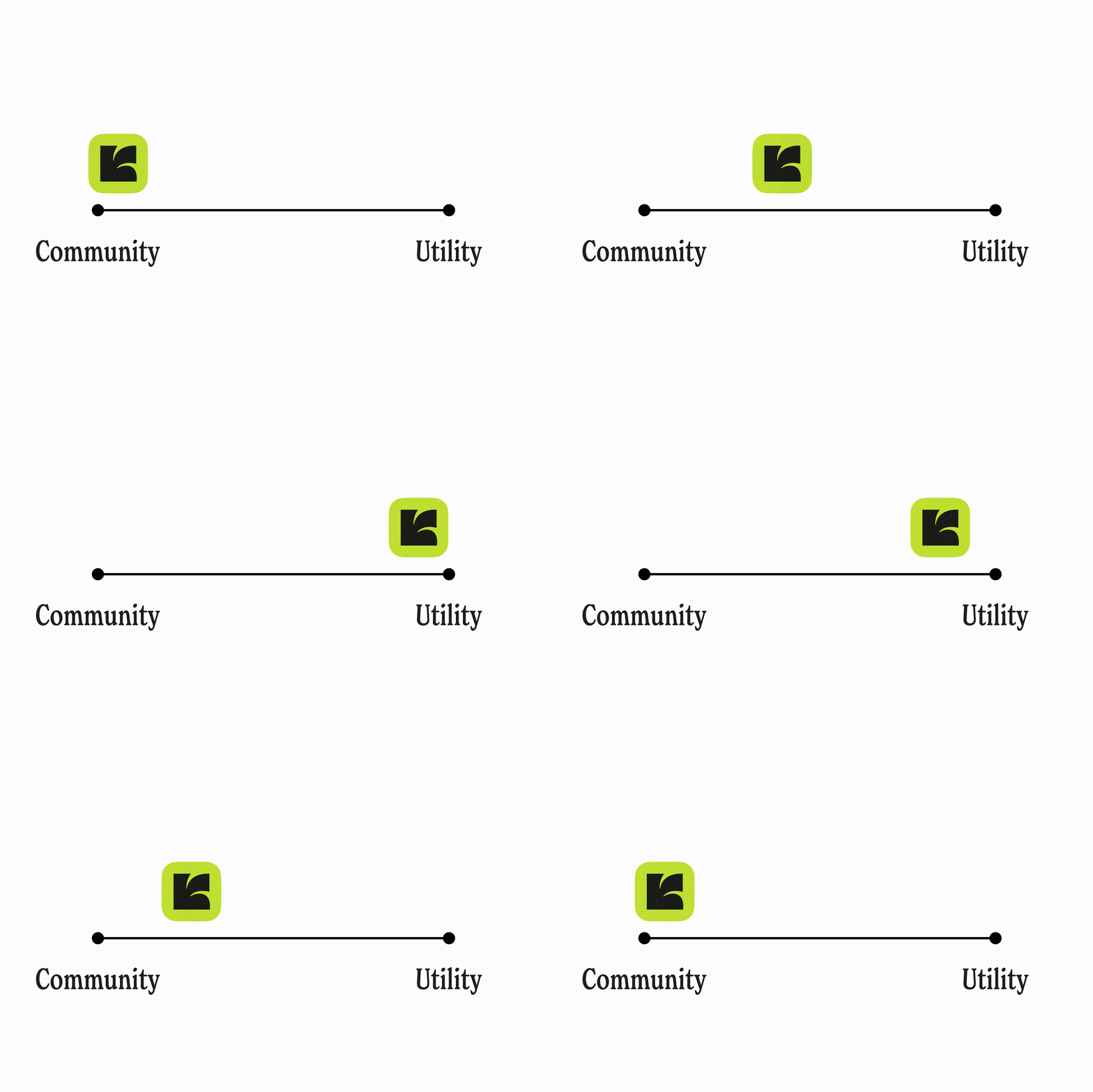
That gave us a much sharper problem statement. Read these two side by side:
“Creators need a professional network”
“Creators come for events and leave between them, because nothing in the product is useful on a day with no event”
The first gets you a directory with a messaging tab.
The second gets you a strategy, a daily loop, and a pretty clear list of things not to build.
Ostensibly, those are the same facts. But they make up a completely different brief. (Yes, this is the same move as beehiiv's “the request is not the problem.” It turns out the same move works on a lot of problems. In the biz, we call that a framework.)
Heartbeat or skyline? Run the test
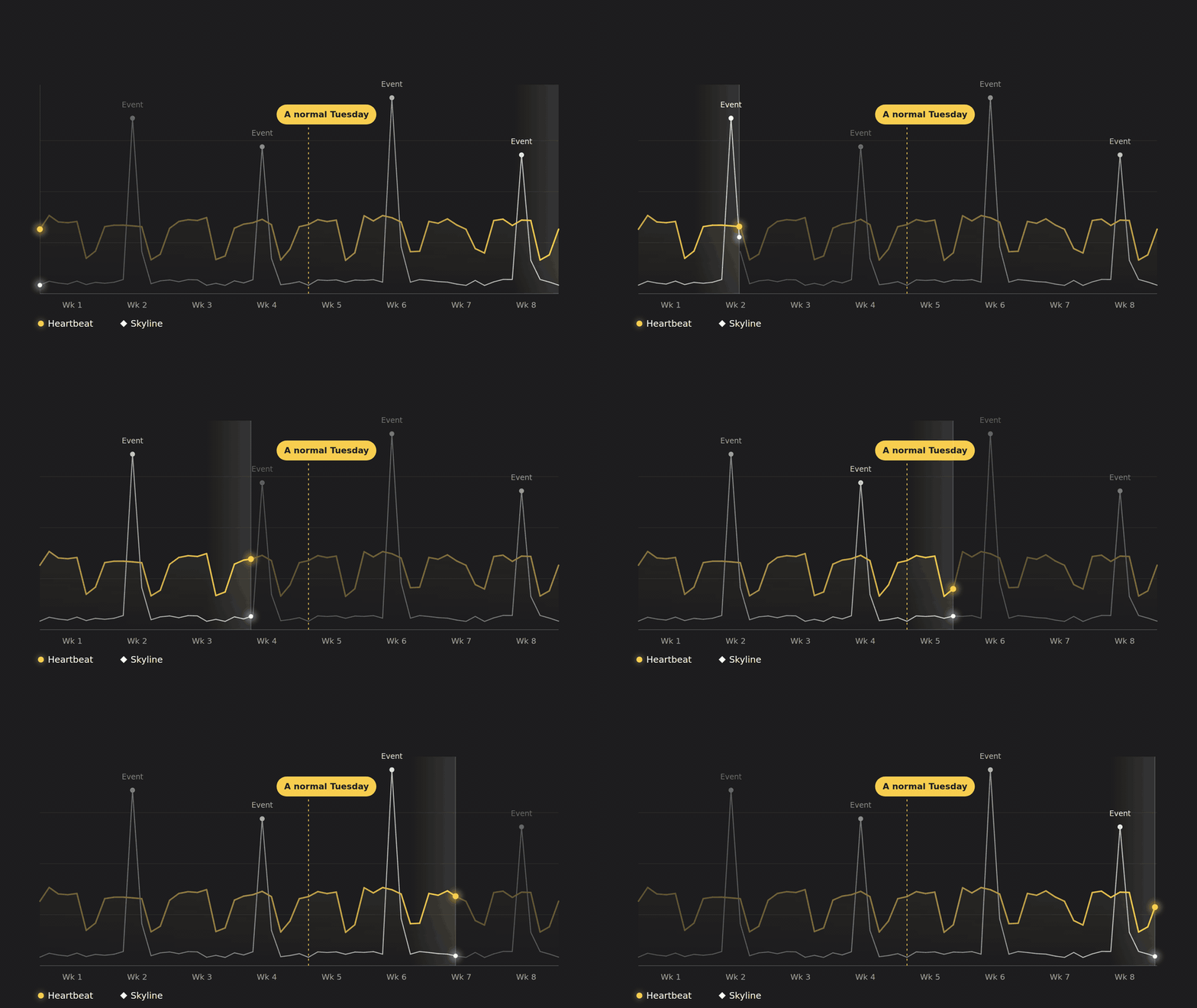
If you have a product with real users and a usage graph that makes you a little nervous, try this. It takes about an hour.
- Pull 8 weeks of daily active usage and look at the shape. Steady pulse with small ups and downs? Heartbeat. Flat line with tall spikes on launch days, events, or the day your newsletter goes out? Skyline. Be honest about which one you have.
- For every spike, name what caused it. If the answer is something you did (an event, a campaign, a promo), you are renting attention. That's fine for now, but you should know you're paying for it.
- Write one sentence, per user type, finishing this: “On a normal Wednesday (!!), they open the app to ___.” If you can't fill in the blank without mentioning a scheduled thing, you've found your real problem. If two people on your team fill it in differently, you've found two problems.
- Check where the Wednesday behaviour is happening today. Your users already have a reason to show up every day. They're just doing it somewhere else, in group chats, Discord, a spreadsheet, a DM thread. That's where your daily loop is hiding.
None of this needs a consultant (although hi, we're right here). It just needs someone willing to say out loud that great beta numbers and a daily habit are two different results.
If you found this useful, forward it to the founder you know who is currently celebrating their beta numbers. Let them celebrate! Then send this and get them freaked out about mouth spiders.
Next up: Koala could have been at least four different products. Instead of picking one in a meeting, we designed all of them on purpose. I'll explain why that wasn't as wasteful as it sounds.